Custom Rugby Kit: Online Design Guide

Rugby kit design lives or dies on details a generic template can’t handle: reinforced seams that survive a ruck, collars that don’t chafe under contact, and numbering referees can actually read at pace. Get a custom kit builder wrong and you’ve got a wardrobe of shirts nobody wants to wear. Get it right, and a job that sounds like a difficult undertaking turns out to be easy and hassle free.

That’s not a promise from our brochure. It’s a real Trustpilot review from Dan, who said:

Excellent service & products

Summer was excellent in her communication and really made the process as clear and simple as it could be. The children’s rugby shirt and shorts quality is very impressive and arrived within the stated timescales and I would recommend and re-use Decathlon Club in the future.

Here’s what this article covers:

  • How our online kit builder and in-house design team split the work between them
  • A step-by-step walkthrough of designing a kit online
  • How to brief our designers directly if you’d rather skip the builder
  • Choosing between Pro Fit and Standard Custom Rugby Kit
  • Pricing, lead times, and what real clubs say about the process

Two Ways to Design a Rugby Kit

You’ve got two routes in, and most clubs end up using a bit of both.

The online kit designer is self-service: pick a template, drop in your colours and logos, and preview the result in 3D before you submit. It’s fast, and it’s the right call for a club that already knows exactly what it wants.

The in-house design team takes over when a brief needs a human – a from-scratch crest, a tricky sponsor layout, or a design with no template to start from. This is where most rugby-specific requests land, because rugby kit has physical demands that generic templates don’t always account for: heavy-duty stitching at stress points, fabric in the 220-280 GSM range for durability, and collar and number placement built around referee visibility rather than looks alone.

Both routes get you sublimation printing, which embeds the design into the fabric fibres rather than sitting on top of it – the reason crests and sponsor logos don’t crack or peel after a season of washing and contact.

Designing a Kit Online, Step by Step

  1. Choose your garments. Select rugby from the sport menu, then pick jersey, shorts, socks, or training wear, and a Pro Fit or Standard Custom template.
  2. Pick a base design. Hoops read as traditional, chevrons feel more dynamic, fades give a modern look, and solids keep things simple – the right call usually comes down to your club’s existing identity.
  3. Set your colours. Use the colour picker for primary, secondary, trim, and collar, and keep an eye on contrast – referees need to read numbers at a distance and under floodlights.
  4. Upload logos. Crests, sponsors, and school badges go on chest, sleeve, or back at no extra cost for standard placements; player names and squad numbers are added at this stage too.
  5. Preview and save. Rotate the 3D mock-up, check collar and cuff detail, and save a version to compare against alternatives.
  6. Submit for review. Our design team checks the file, sends a proof, and confirms sizing before anything goes to print.
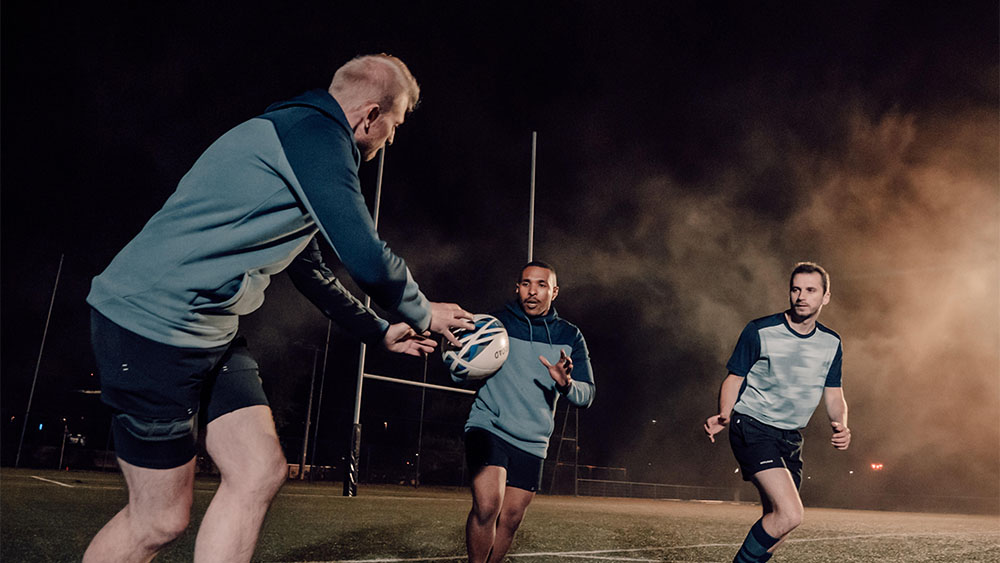
Rugby players training under floodlights at night wearing Decathlon Club custom rugby kit.

Briefing Our In-House Design Team Directly

Some clubs would rather talk it through than build it themselves – particularly for anniversary kits, retro throwbacks, or a full rebrand.

To brief a designer, come with: your club’s history and colours (founding year, traditional palette), existing crest and sponsor files, reference photos of past kits, and a clear sense of what “done” looks like. There’s no template restriction on this route – you get full creative freedom, with our designers handling the printing know-how.

The usual workflow: initial mock-ups within 24-72 hours, one or two feedback rounds, then sign-off before print. Design work is included in the garment price for both Pro Fit and Standard Custom.

Choosing Between Pro Fit and Standard Custom Rugby Kit

FeatureStandard CustomPro Fit
FitClassic, relaxed cutAthletic, contoured cut
FabricRobust, heavier weightLighter, performance-focused
Best forMinis, juniors, schools, social sides1st XVs, BUCS sides, academy squads
DurabilityBuilt for rough handling, frequent washingBuilt for competitive performance
BudgetLower per unitHigher per unit

Most clubs don’t pick one tier across the board. A common pattern we see: Pro Fit for the match-day squad, Standard Custom for training wear and juniors, which keeps the overall spend down without compromising on the shirts that matter most. If budget is the main constraint, Standard Custom is the safer starting point – you can always upgrade specific squads later.

Browse both ranges on our Custom Rugby Kit page, or contact us to talk about about which mix suits your age groups and budget.

Design Details Worth Getting Right

Colour and contrast. Keep secondary colours to cuffs, collars, and side panels rather than spreading them across the shirt – busy kits read worse on the pitch, not better. Number contrast isn’t optional if you want referees (and broadcasters, if you’re filmed) reading them at a glance.

Sponsor placement. Front and centre without overpowering the crest is the standard approach; if a sponsor’s colours clash with the kit, our designers can recolour the logo or move it to a contrasting panel rather than force it onto a background that fights it.

Typography and numbers. Bold, competition-legible fonts, checked against your league’s regulations before anything goes to print.

Heritage touches. A founding year inside the collar, a subtle nod to your town, or a patch marking an anniversary season – small details, but they’re the ones players notice years later.

Consistency across the range. Match jersey, shorts, training wear, and leisurewear should share colour breaks and logo placement. Clubs that get this right across men’s, women’s, and youth sides build a look supporters actually recognise pitch-side.

Rugby team wearing matching custom rugby shirts from Decathlon Club

From Design to Delivery

Sizing. Rugby cuts run differently to football or leisurewear – more room through the shoulders for forwards especially. Sample sets or a fitting night are the safest way to avoid a reorder. Sizes typically run junior through to 4XL.

Minimum orders and reorders. Most custom runs start from as few as 10 jerseys per design, and once your design is on file, reordering for a late-joining player is straightforward – several reviewers specifically flag how painless repeat orders are, one describing a second reorder as “quick and efficient… once again.”

Lead times. Budget 5 weeks from artwork sign-off in a normal window; June to August, as pre-season demand peaks, can push that further.

Post-sign-off changes. Amendments after approval can cost time or money. Double-check names, numbers, and sponsor spelling before giving the green light – it’s the cheapest step in the whole process to get right.

Care. Wash inside out, below 40°C for performance fabrics, no fabric softener. Basic care is most of what separates a kit that looks sharp all season from one that fades by October.

Getting Started

Use the kit designer to explore templates and get a feel for what’s possible, or go straight to our team with a brief if you already know your colours, crest, and timeline. Either way, real clubs – from junior rugby sides to beach rugby socials to BUCS squads – go through the same design and sign-off process described above before anything reaches production.
Back to School: Multi-Sport Kit for PE Departments Made Simple

If your PE department is managing football, netball, hockey and athletics kit from separate suppliers, with separate crests and separate ordering windows, you already know how much time that absorbs. There is a simpler model: one supplier, one crest, one online ordering portal covering every sport the department runs.

Key Takeaways

  • PE departments sourcing school sports kit sport by sport end up with inconsistent branding, staggered lead times and admin spread across multiple supplier accounts.
  • Consolidating football, netball, hockey and athletics kit under a single supplier with one crest and one ordering portal cuts admin and keeps every team looking like they belong to the same school.
  • Written for PE leads and MAT procurement staff managing kit across one school or several academies in the UK.
  • A single portal lets parents order direct through a self-serve shop, while the school avoids holding stock on site.

What Counts As A School Sports Kit Today

A school PE kit is the set of clothing and accessories a child is required to wear for PE lessons, fixtures and clubs. It typically includes a PE shirt, shorts or skort, sports socks and suitable footwear.

What has changed is that a modern kit needs to work across multiple sports rather than being locked to one. If your department runs football, netball, hockey and athletics, you should not need five separate kit lists.

Core garments for a multi-sport base kit:

  • Breathable t-shirts or a polo shirt for lessons and fixtures
  • Multi-sport shorts or skort
  • Training pants or leggings for colder terms
  • Midlayer or quarter-zip top
  • Sport socks (long, for shin-pad sports)
  • Optional base layer for winter cross-country or outdoor sessions

Size-inclusive design matters too: full size runs from junior sizes (Year 7) through to adult, covering all ages rather than relying on generic one-size items that rarely deliver the right fit.

The Problem With Sourcing Kit Sport-By-Sport

When a PE lead juggles multiple suppliers, the day-to-day reality looks like this:

  • Separate account logins and email threads for football, netball and hockey gear
  • Inconsistent branding between sports: different crest sizes, slightly different colours, mismatched style
  • Staggered lead times that make it hard to have every team kitted out for the start of term
  • Budget spread thin across small orders, with no bulk savings
  • Replacement orders mid-year becoming a time sink

For MAT procurement staff, multiply those problems across several academies and the admin overhead becomes significant.

One Supplier, One Crest, One Portal

The fix is straightforward. Consolidate football, netball, hockey and athletics kit under a single supplier. Apply one school crest consistently across every item. Give parents one online portal to find, choose and order what they need.

Consistent Branding Across Every Sport

One colour palette, one crest, consistent fonts for names and squad numbers, and coordinated staff kit for fixtures and open evenings. Sublimation printing allows a wide range of design options, so there is no trade-off between a unified look and a distinctive identity.

One Ordering Portal Instead Of Several Email Threads

Schools can set up a branded online shop for sports kit. Parents select the school, pick compulsory and optional products, filter by size, and pay online. Decathlon Club handles stock, production and delivery so the school does not hold kit on site. Dedicated account managers assist with online shop setup, so there is no heavy lift for the PE department.

Budget And Timeline Benefits Of A Single Supplier

Fewer purchase orders, one set of lead times to plan around, and simpler reconciliation for MAT procurement across multiple academies.

For trusts, it’s worth agreeing a “master kit”: one base shirt style, shorts, socks and midlayer that can flex slightly per campus (an accent colour or campus name) while staying recognisably the same brand.

Sizing, Fit And Comfort: What PE Departments Should Check

What matters to a buyer is practical, not theoretical. Check for:

  • Full size runs from junior through adult, so every child from Year 7 to sixth form gets a comfortable fit
  • Unisex and girls’ fit options, so girls are not forced into oversized cuts
  • Elasticated waistband on shorts and training pants for quick changes between sports
  • Breathable, technical fabrics that hold their shape through repeated washing
  • Indoor and outdoor suitability: sports hall, grass and 3G surfaces

On durability, reinforced seams and colour-fast dyes matter more than any single spec – the goal is kit that still looks smart after two to three school years, which helps save on replacement costs and reduces lost-property headaches.

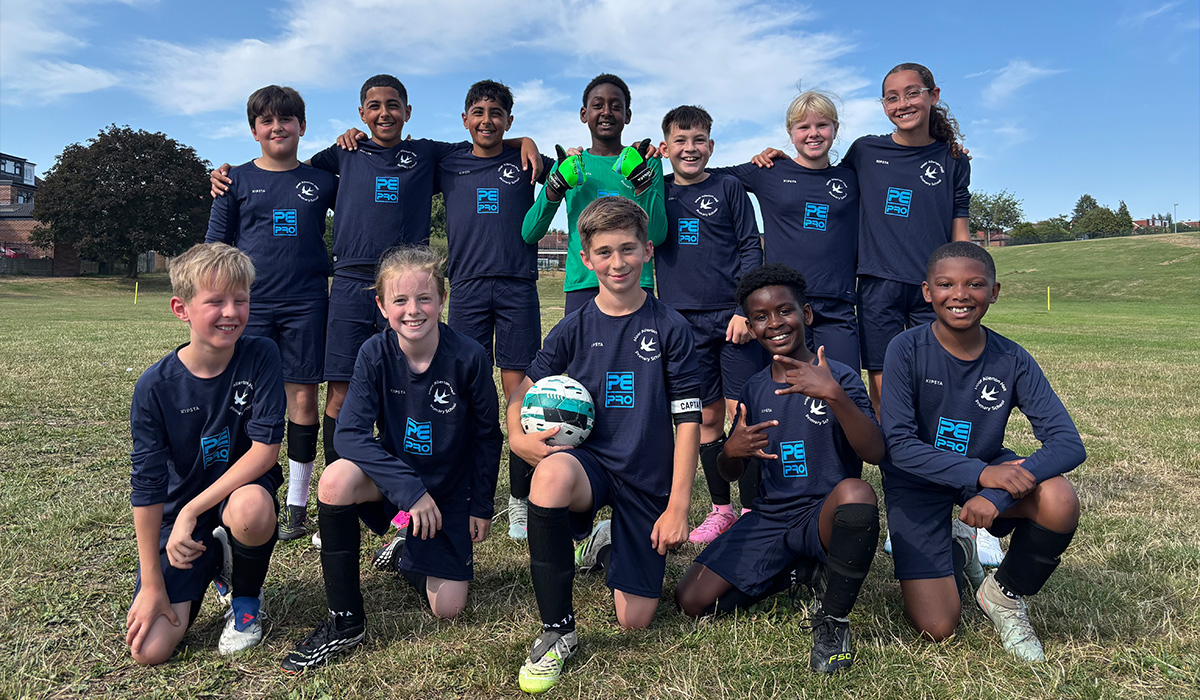
Four school children wearing blue custom Decathlon Club PE Kit.

What To Look For In A School Kit Supplier

A practical checklist when you are ready to talk to suppliers:

CriteriaWhat to check
Minimum ordersLow or no minimum is ideal for smaller cohorts or new campuses
Lead timesConfirm current stock-item and bespoke-order timelines
Design supportFree mockups, sample garments, in-school sizing events
Size chartsClear guidance for families ordering at home
PersonalisationStudent initials, squad numbers; many schools restrict this for curriculum PE kit to control cost
Pricing transparencyPrices excluding VAT stated upfront

Ideas For Multi-Sport PE And After-School Clubs

A well-planned multi-sport kit supports a broad extracurricular offer without needing extra garments. The same items a child wears in curriculum PE can carry them through clubs and fixtures.

  • Mixed football, netball and hockey rotation club (one kit, three sports, one game per week)
  • Girls’ multi-sport pathway combining athletics, fitness circuits and small-sided games
  • Trust-wide athletics or cross-country club using the same branded kit across academies
  • Inclusive options: a Couch to 5K group, lunchtime fitness sessions, or a staff-vs-students charity match

Consistent branding also supports school identity at inter-school fixtures and trust tournaments, helping every team look and feel part of something bigger.

FAQ: School Sports Kit And Multi-Sport PE

What is a PE kit?

A PE kit is the required clothing and accessories for PE lessons, fixtures and after-school clubs. It typically includes a PE shirt, shorts or skort, sports socks and suitable footwear such as trainers or boots for specific sports.

What is a PE kit for school?

It is the same core kit, specifically the version a school mandates or supplies as its standard PE uniform, usually with the school’s crest or colours applied for a cohesive look across year groups.

What to put in a PE kit?

A practical list: breathable t-shirt or polo, multi-sport shorts, sports socks, trainers, shin pads for football or hockey. For colder terms, add a quarter-zip top, training pants and a base layer.

What does multi-sports include?

Multi-sports typically blends football, netball, hockey, athletics and fitness training within one programme or club. Some schools also include swimming, dance or rugby touch depending on facilities and staffing.

What are some ideas for multi-sport after-school clubs?

Year 7 to 8 rotation clubs cycling through football, netball and hockey each half term. A girls’ multi-sport pathway mixing athletics, small-sided games and fitness circuits. Trust-wide cross-country or athletics clubs that bring academies together. Inclusive options like Couch to 5K groups or staff-vs-students charity matches.

Talk To Decathlon Club

If you are looking to consolidate your school sports kit across a department or trust, get in touch with Decathlon Club to discuss the portal, the design process and how to make ordering simple for parents and staff alike.

Sponsorship Guide for Sports Clubs

Every Saturday, grassroots pitches across the UK and Europe fill with players wearing custom sports kit with someone else’s name on their chest: a local estate agent, a plumber, a car dealership. That’s sport sponsorship: a business pays to put its name in front of a club’s players, parents and community, and in return helps fund the season.

Sponsors come in different shapes. A local business might sponsor one youth team for a season. A regional brand might back several clubs across a county. A national company might sponsor a semi-pro club’s stadium, cup competition or entire youth setup. Each brings different assets: front-of-shirt, back-of-shirt, sleeve, training wear, pitch boards, matchday programmes, and digital or social placements.

Kit is where the deal becomes visible. Once a club has a sponsor, that logo needs to look like it belongs on a matchday shirt. Decathlon Club works with grassroots and semi-pro clubs across the UK to place sponsor logos properly, right colours, right size, right position, so the sponsorship looks like the professional partnership it is.

Why Sport Sponsorship Is Essential for Grassroots Sport

A typical under-14 football season costs more than most people outside the committee realise: pitch hire, league and cup fees, referee fees, kit, travel, and winter facility hire.

Subs rarely close that gap, particularly for clubs keeping fees low so families aren’t priced out. Sponsorship is often the difference between breaking even and having to raise subs, cut an age group, or turn players away.

The value isn’t only financial. A sponsor can bring expertise (an accountant helping with the books), free services (a print shop covering posters), volunteers, equipment, and credibility. A run of professional-looking local sponsors signals a well-run club, which helps with attracting coaches and winning grants.

Sponsor income also supports inclusion directly: lower subs for families who need it, hardship funds, and the pitch time and kit needed to grow girls’ teams and disability football. A club might use new sponsor funding to launch a girls’ age group or a disability team in 2027, turning a shirt logo into wider participation.

Types of Sport Sponsorship Deals

Most clubs mix deal types rather than relying on one:

  • Cash sponsorship. A fee for a season or longer. A grassroots youth team might charge £250-£750 for front-of-shirt sponsorship; a National League club’s shirt deal can run into the thousands. Training kit and single-tournament sponsorship are cheaper entry points for a first-time sponsor.
  • In-kind sponsorship. No cash, but real value: free printing, matchday physio cover, a free venue for an awards night. Often the easiest first “yes” from a local business.
  • Product and equipment sponsorship. Boots, balls, GPS vests or matchday drinks supplied by a sports or nutrition brand in exchange for branding and social mentions.
  • Rights packages. Naming rights to the ground, a stand, or a cup competition, for example a club renaming its pre-season tournament “the 2026/27 Decathlon Club Community Cup”. Suits larger local employers wanting sustained visibility.
  • Multi-year vs one-season deals. One season is lower risk for a new sponsor; multi-year gives the club budget certainty. Clubs with strong renewal rates increasingly pitch multi-year terms with a modest year-two discount.

How to Find Sponsors for Your Club

Most clubs find sponsors through their existing network and structured outreach, not luck.

Start with who’s already connected: parents’ employers, ex-players running businesses, and the local businesses members already use (estate agents, tradespeople, cafés, gyms, car dealerships). This “warm network” converts far better than cold approaches.

Then check who sponsors other teams in your local league or county FA, and look for gaps: businesses that support grassroots sport but haven’t backed a team in your area or age group yet.

Build tiered packages rather than one take-it-or-leave-it offer:

TierTypical assetsIndicative price (grassroots)
BronzeSleeve or training-kit logo, social mention£150-£300/season
SilverBack-of-shirt, pitch board, programme mention£300-£600/season
GoldFront-of-shirt, website and social feature, matchday shout-outs£600-£1,200/season

Before approaching anyone, gather your audience data: player and parent numbers, social followers, matchday attendance, school links, and tournament travel. “We reach 40 families every Saturday and 900 social followers” is a far stronger pitch than a general appeal.

Digital tools are increasingly part of this too: platforms such as Kit Funder, built to connect grassroots clubs with businesses that want to sponsor sport, rather than relying on cold emails alone.

Approaching Local Businesses Professionally

Local businesses are still the backbone of grassroots sponsorship in the UK and Europe, so this outreach is worth doing properly.

The biggest factor in getting a reply is personalisation. A generic “Dear Sir/Madam” email reads exactly like what it is. A message that names the owner, mentions a shared connection, and references the local area gets read.

A good proposal should cover:

  • Who you are: the club, and the level you play at.
  • What you need: sponsored kit, travel costs, a facility upgrade, or whatever the specific ask is.
  • What you offer in return: the tiered package and specific assets.

Include impact, not just numbers: participation figures, community projects, school links, and, where genuinely true, support for girls’ and disability football or wider community campaigns.

Follow up properly. A first message with no reply isn’t a no; wait 7-10 days, then send a short follow-up. Two follow-ups is usually the right ceiling before moving on to the next prospect.

Building Long-Term Sponsor Relationships

Renewing a sponsor is easier than finding a new one. Clubs that treat sponsors as partners, not one-off cash sources, keep them for years.

Activate the sponsorship day-to-day: social shout-outs, “sponsor of the match” posts, joint community events, and photos of the squad visiting the sponsor’s premises. All low-cost, and all give the sponsor something to point to.

At season end, report back properly: an impact summary with photos, reach statistics, results, and a story or two about what the sponsorship funded. That’s the difference between a sponsor who renews without being asked and one who quietly drifts away.

There’s also plenty a club can offer at no cost: a website feature, regular tags in matchday posts, and an invite to the presentation evening.

Plan multi-year with sponsors where the relationship is working: involve them in kit refresh cycles, new age-group launches, or a promotion push. A sponsor who feels they’re growing with the club is far more likely to increase their commitment.

A common pattern: a sponsor starts as a single-team shirt sponsor for an under-12s side, and after two or three seasons of genuine activation, grows into a club-wide partner backing multiple age groups and training kit.

Common Challenges in Sport Sponsorship (and How to Overcome Them)

Most clubs hit the same obstacles: time, confidence and competition.

  • “We don’t know how to find sponsors.” Build a systematised outreach list, use online platforms, and spread the workload across committee roles.
  • “Businesses can’t see the benefit.” Usually a pitch problem. Present clear numbers, community impact, and realistic pricing tiers.
  • “We’re in a crowded area.” Differentiate on quality: sharper social content, visible community projects, active girls’ and disability teams, and a professionally produced sponsored kit.
  • Admin burden. Standardise with a reusable sponsorship pack template and a simple contract, and lean on suppliers like Decathlon Club for design and production.

On compliance: be careful which sponsors fit a junior or family club (gambling and alcohol sponsors are generally unsuitable for teams involving minors), and check league rules and safeguarding guidance before signing anything.

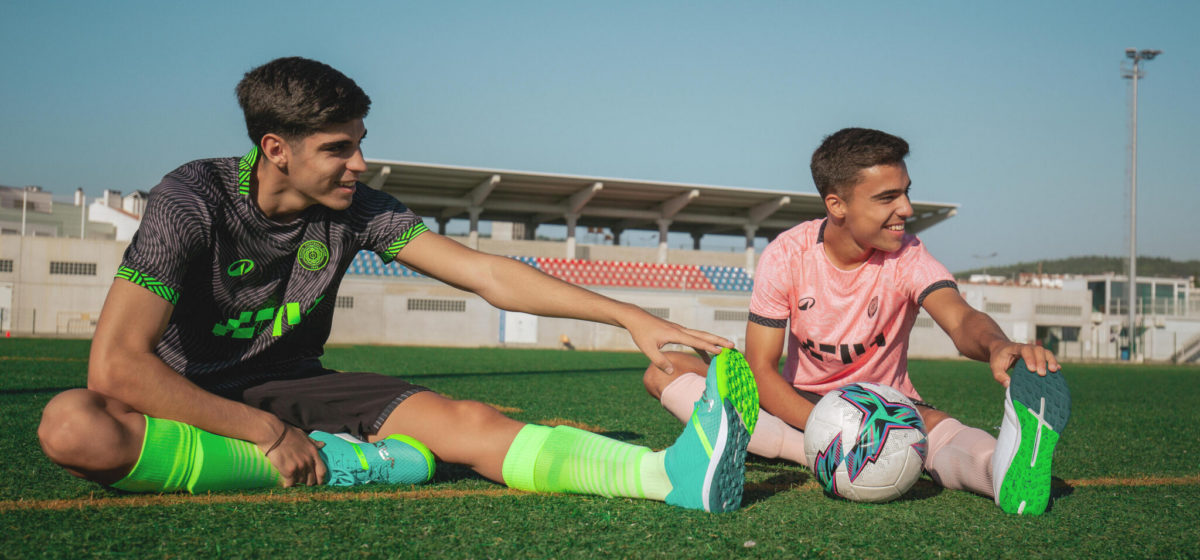
Boys stretching in custom Decathlon Club football kit.

Next Steps for Clubs Looking to Secure Sponsorship

Audit what the club needs, define clear packages, put together a simple deck and sort kit and branding with Decathlon Club, so any sponsor you land looks the part from day one.

A rough 30-day plan:

  • Week 1: Audit funding needs; draft tiered packages; pull together audience numbers.
  • Week 2: Build a one-page deck; map the club’s warm network.
  • Week 3: Send the first round of personalised outreach; respond to early Kit Funder matches; start a kit design in the Decathlon Club kit designer.
  • Week 4: Follow up on week 3’s outreach; review offers; finalise packages and confirm kit designs for production.

A well-designed, sponsored kit changes how a club is perceived: by players deciding where to sign, coaches deciding where to volunteer, and the next sponsor deciding whether this club is a good investment.

Ready to start? Design your kit and share this guide with the rest of your committee and coaching staff.

10 Football Kit Design Ideas: Custom Kit Guide

Designing a football kit can be one of the most exciting parts of preparing for a new season – but starting with a blank canvas isn’t always easy. Whether you’re designing for a grassroots club, school, youth academy or corporate team, the challenge is finding a look that represents your identity while remaining practical on the pitch.

Modern custom football kits give clubs far more freedom than traditional teamwear. From classic stripes and retro-inspired graphics to subtle sublimated patterns and bold goalkeeper colours, there are plenty of ways to create a kit that looks professional and feels uniquely yours.

A complete kit can include football shirts, shorts, socks, goalkeeper kits and training wear, so it’s worth thinking about how your design will work across the whole range rather than focusing on the shirt alone.

If you’re ready to start experimenting, try the Decathlon Club Kit Designer. You can explore different colours, templates and customisation options and see how your ideas come together.

Here are 10 football kit design ideas to get you started.

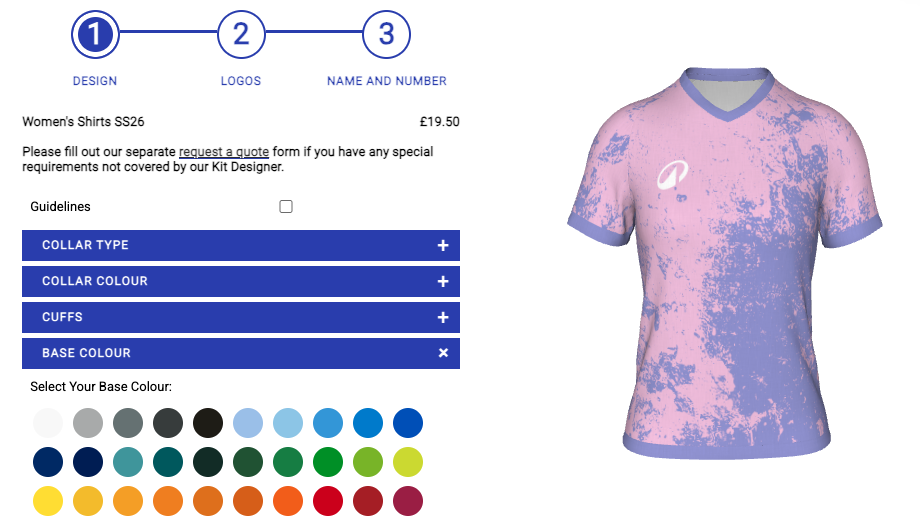
Pink and lilac v-neck football shirt in the Decathlon Kit Designer, with colour options, logo placements, and collar options.

1. Classic Stripes with a Modern Twist

Stripes are a football-shirt classic for good reason. They’re instantly recognisable and can be adapted to almost any club colour combination.

Try:

  • Vertical stripes in two or three club colours, varying the width for a more contemporary look.
  • Pinstripes within broader bands for added detail without making the shirt too busy.
  • Hoops or sashes if you want something more distinctive.
  • Contrast sleeves or cuffs to introduce a secondary colour while keeping the main design clean.
  • Subtle gradients or colour shifts within the stripes for a modern interpretation of a traditional style.

The key is to choose one dominant pattern and give the crest, sponsor and player numbers enough clear space around it.

Use the kit builder to experiment with different base colours, sleeve options and cuffs, then see how your crest and sponsor work with the design.

2. Try a Minimalist Single-Colour Kit

Sometimes the simplest design makes the biggest impression.

A single-colour football shirt creates a clean foundation for your club crest, sponsor and other details. Navy, forest green, burgundy, white and black can all create a strong base, while a contrasting trim adds character.

Consider:

  • A tonal graphic that’s only slightly lighter or darker than the main colour.
  • Contrast piping around the collar or sleeves.
  • A distinctive collar shape to give the shirt a traditional or modern feel.
  • A single accent colour for the badge, sponsor, cuffs and socks.

Minimalist doesn’t have to mean boring. Limiting the number of colours can actually make the details you do choose stand out more.

It can also make it easier to maintain a consistent visual identity across shirts, shorts, training wear and fanwear.

3. Build a Kit Around Your City and Community

The strongest football kits often have a story behind them.

Instead of choosing colours simply because they look good, think about what makes your club, school or local area distinctive. Your surroundings, history and community can all provide inspiration.

Ideas include:

  • Using local colours or flag elements as secondary details.
  • Taking inspiration from local architecture, landmarks or landscapes.
  • Creating an abstract pattern based on a river, coastline, skyline or local environment.
  • Incorporating a club mascot or historical symbol into a subtle repeating graphic.
  • Using small, tone-on-tone details to represent an important part of your club’s history.

You don’t need to put a landmark across the entire shirt. A small visual reference can be enough to make the design feel personal.

For custom sublimated designs, artwork can also be adapted into patterns that become part of the fabric rather than sitting on top of it. This means we can create detailed and intricate designs that will last wash after wash.

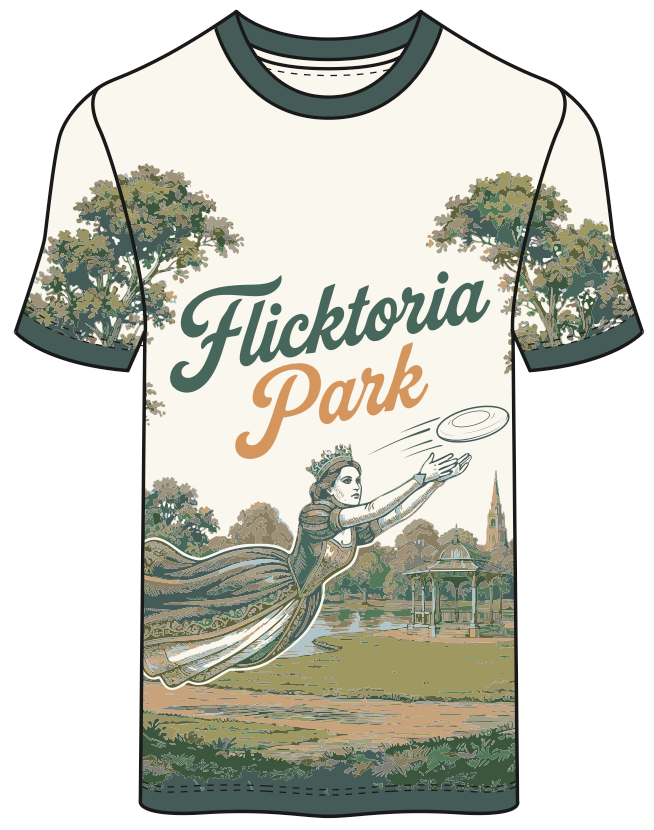
Cream shirt with detailed park illustration, bandstand and figure throwing a frisbee, reading "Flicktoria Park"
Just one of our in-house design team’s amazing pieces!

4. Bring Back the Retro Look

Football kit design has a long history of bold colours, oversized graphics, geometric patterns and distinctive typography. That makes retro styles a great source of inspiration for a modern team kit.

Try combining:

  • Chevrons, zigzags or diagonal blocks
  • Checkerboard or geometric panels
  • Vintage-inspired collars and cuffs
  • Bold, block-style numbering
  • Simplified crest treatments
  • Throwback colour combinations

You don’t have to reproduce an old kit exactly. Taking one element from a particular era and combining it with modern cuts and fabrics can produce something that feels nostalgic without looking dated.

For more background on the resurgence of vintage football shirt design, read Why vintage football shirt designs are making a comeback.

5. Experiment with Subtle and Statement Patterns

Sublimation opens up plenty of possibilities for custom football shirt design. Because the dye is integrated into the fabric, sublimated graphics don’t have the same peeling or cracking issues associated with some surface-applied prints.

There are two main approaches.

Subtle patterns

Use low-contrast graphics such as:

  • Ghost stripes
  • Tonal diagonal lines
  • Repeating club initials
  • Watermark crests
  • Small geometric motifs

These add depth while leaving the main branding easy to read.

Statement graphics

For a more adventurous look, consider:

  • Oversized club initials
  • Large animal or mascot graphics
  • Bold geometric shapes
  • Full-panel illustrations
  • Strong diagonal graphics

The important thing is balance. If the shirt has a large graphic, leave enough clean space around the crest, sponsor and numbers.

6. Choose Colours That Work on the Pitch

A colour combination that looks great on a computer screen still needs to work under floodlights, in photographs and on a muddy Sunday morning.

Start with your club’s core colours, then think about contrast and visibility.

Reliable combinations include:

  • Red and black
  • Blue and white
  • Navy and gold
  • Maroon and sky blue
  • Black with a bright accent
  • Green with white or contrasting trim

The most important consideration is contrast. Player names and numbers need to be easy to read, while the crest and sponsor should remain visible against the shirt.

It’s also worth planning your home, away and third options together. A strong kit collection should give you enough contrast to avoid clashes with opponents.

Don’t forget the shorts and socks. A contrasting pair of shorts can add definition, while a full monochrome kit can create a much stronger visual block.

Before committing to a design, check how your colours work across the complete kit rather than judging the shirt in isolation.

Red and black Decathlon custom football kit, worn by Le Bosh FC.
Le Bosh FC – in a signature red and black kit design… *Chef’s kiss*

7. Get Crest, Sponsor and Number Placement Right

A professional kit isn’t just about the graphic. It’s also about where every element sits.

Club crest

The traditional left-chest position remains popular, but you can explore alternatives such as a central crest or a subtle oversized crest used as a background graphic.

Whatever position you choose, make sure the crest remains clear at a distance and in photographs.

Sponsor

Your sponsor should complement the shirt rather than compete with the club crest.

Consider:

  • Sponsor colour
  • Logo size
  • Available negative space
  • Contrast against the shirt
  • Secondary sponsor locations such as sleeves or the back

If the sponsor’s brand colours clash with the kit, discuss whether an approved single-colour version of the logo is available.

Names and numbers

Readability should always come first. Choose a number colour and font that contrast clearly with the shirt, particularly if the back contains a pattern.

If your club competes in a league or organised competition, check its kit regulations before finalising positions, colours and sizes for numbers, badges and sponsors.

8. Give Your Goalkeeper Kit Its Own Identity

Your goalkeeper needs to stand out from the rest of the team, but that doesn’t mean the kit should look unrelated.

Bright colours such as neon green, purple, orange or yellow can create the necessary contrast while still incorporating elements from the main outfield kit.

For example, you could use:

  • The same crest treatment
  • Matching collar or cuff details
  • A related graphic pattern
  • The same typography
  • A shared secondary colour

Practical considerations matter too. Think about visibility, movement, comfort and whether your goalkeeper needs additional features such as padding.

You can also use the same approach for coaches, substitutes and staff: keep the wider visual identity consistent while giving each group a clear role within the club.

A distinctive GK kit that matches the design language of the outfield players… We love to see it!

9. Turn Your Kit into a Complete Club Identity

Your football shirt doesn’t have to exist in isolation.

Once you’ve established your colours, typography and key graphic elements, carry them through the rest of your club’s visual identity.

For example:

  • Use the shirt’s main pattern in social media graphics.
  • Carry your colours into training tops and tracksuits.
  • Use consistent typography for player graphics and matchday content.
  • Apply the same crest treatment to hoodies, jackets and fanwear.
  • Repeat distinctive visual elements on banners and club merchandise.

This makes the club instantly recognisable, whether someone sees the team on the pitch, in a photograph or on social media.

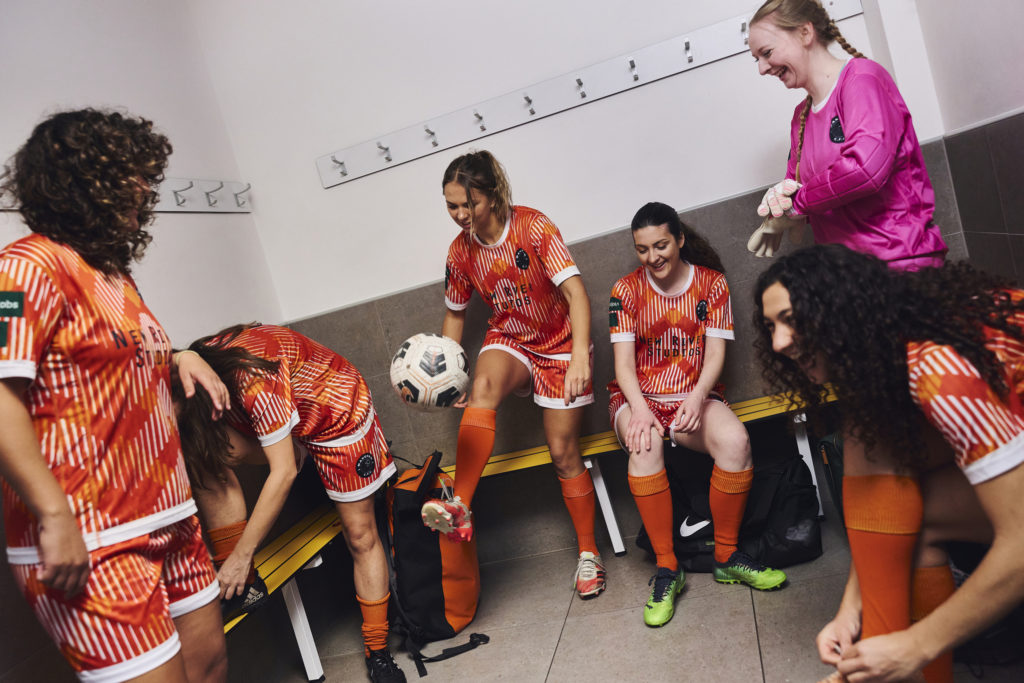
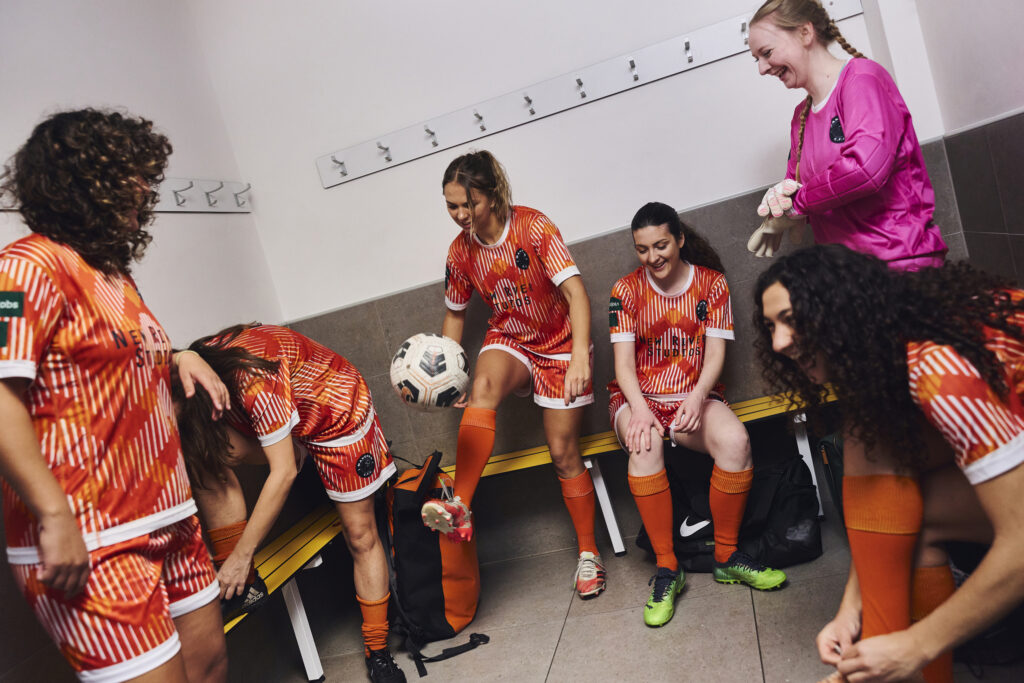
Female football players in the changing rooms wearing orange and white matching patterned shorts and shirts, with orange socks.
A fun and cohesive kit design with matching shirt, shorts, and socks. Just sublime!

10. Design for Longevity, Not Just One Season

The best kit design isn’t necessarily the one with the most graphics. It’s the one your team will still be happy wearing months after launch.

Before approving your design, ask:

  • Does it clearly represent our club?
  • Can players’ names and numbers be read easily?
  • Does the sponsor sit comfortably within the design?
  • Will the shirt work with the shorts and socks?
  • Does the goalkeeper kit feel part of the same identity?
  • Will the design still look good in team photographs?
  • Can elements of it be carried into future seasons?
  • Is it practical for the age groups and teams that will wear it?

Think about longevity when choosing both the visual design and the wider kit range. A strong core identity can remain consistent while patterns, trim and secondary colours evolve from season to season.

How to Start Designing Your Custom Football Kit

Once you’ve got some ideas, the design process doesn’t need to be complicated.

1. Start with your identity

Choose the colours, crest and visual elements that are most important to your club.

2. Pick a design direction

Decide whether you want something classic, minimalist, retro, graphic or completely original.

3. Build the full kit

Check the shirt, shorts and socks together. Don’t judge the shirt on its own.

4. Add your branding

Place the crest, sponsor, names and numbers while keeping readability and competition requirements in mind.

5. Review it at different sizes

A design that looks good on a screen should also work across different player sizes and in team photographs.

6. Get feedback before ordering

Show the final design to players, coaches and club decision-makers. A quick review can identify colour, visibility or branding problems before production.

Frequently Asked Questions

What makes a good football kit design?

A good football kit balances club identity, visual appeal and practicality. Strong colour contrast, clear numbering, effective sponsor placement and a design that works across the entire kit are all important.

What colours work best for football kits?

There is no single best combination. High-contrast pairings such as blue and white or red and black are easy to recognise, while darker colours with a bright accent can create a modern look. Your choice should also consider visibility and potential kit clashes.

Can I design a custom football kit myself?

Yes. Online kit designers allow clubs to experiment with templates, colours and customisation before committing to a final design. The Decathlon Club kit designer is one option for creating and visualising a custom kit.

What is sublimation printing?

Sublimation is a printing process in which dye is transferred into the fabric. This makes it particularly useful for detailed custom sportswear patterns and avoids the raised surface associated with many conventional prints.

Should the goalkeeper kit match the outfield kit?

It should feel like part of the same club identity while providing enough visual contrast from the outfield players. Matching crest, typography, trim or graphic elements can connect the designs.

How do I make sure player numbers are readable?

Use strong contrast between the number and the shirt and avoid placing numbers over particularly busy graphics. If your team competes in an organised league, check its specific kit regulations before finalising the design.

Ready to Create Your Kit?

The strongest football kits combine identity, clarity and practicality. Start with your club colours, choose one defining visual idea, and build the rest of the design around it.

Whether you prefer traditional stripes, a minimalist single-colour shirt, a bold retro graphic or a design inspired by your local community, the goal is the same: create a kit your players are proud to wear.

When you’re ready to turn the idea into a finished design, open the Decathlon Club kit designer and start experimenting. When you have a design in mind, you can contact Decathlon Club to discuss your requirements, including team orders, delivery times and available customisation options.

Custom Hockey Kit Guide for Volunteers

The August Kit Scramble

Every August it’s the same message in a club WhatsApp group somewhere: “Does anyone know what size shirt Millie’s daughter is? And are we doing skorts this year or shorts?” Twenty replies later, nothing is decided, the league fixtures are out, and the custom hockey kit order still hasn’t gone in.

If that’s your club, this guide is for you. Whether you’re running a grassroots junior section, a university squad, or a full multi-team club, here’s everything you need to order before the first whistle in September – shirts, shorts, skorts, goalkeeper gear, training wear – plus the ordering and sizing decisions that separate the clubs who start the season looking sharp from the ones still handing out mismatched spares in October.

Fast answer: How to order your custom hockey kit with Decathlon Club

Decathlon Club supplies fully custom hockey kits to clubs, schools, and universities across the UK and Europe. The process is built for volunteer coordinators, not procurement departments:

  1. Design online in the kit designer – templates, patterns, and colourways you can adjust in real time, no design software needed.
  2. Upload your club crest and sponsor logos, positioning them on front, back, and sleeves.
  3. Confirm colours and sizes for every player, juniors to seniors.
  4. Approve digital artwork from the in-house design team – mock-ups are sent before anything goes into production, and the team will redraw a low-resolution badge rather than print a blurry one.
  5. Place your order. Delivery in 5 to 6 weeks.

Minimums start at 5 items per garment for playing kit, with no minimums for repeat orders and top-ups – and if you’re coordinating mixed age groups, one account manager plans across all your squads so the under-12s match the first XI.

Lead time: allow 5-6 weeks from artwork approval, and work to the top of that range in July and August, when every club in the country is ordering at once. The maths is simple: to be certain of kit for a September start, your artwork needs approving in July.

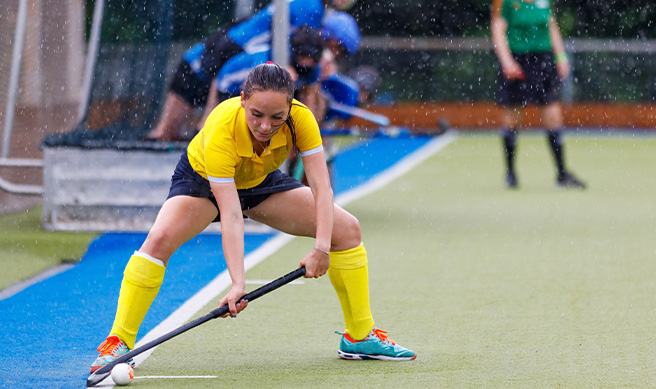
Hockey player in yellow and navy kit playing outside in the rain.

Hockey kit checklist: what every club needs for September

UK and European seasons start in early September, with England Hockey League fixtures typically beginning mid-to-late month. Use this checklist so nothing gets remembered the week before the first fixture:

Matchday essentials

  • Home and away hockey shirts, fully numbered
  • Hockey shorts or skorts in matching home and away colourways
  • Home and away socks, colour-blocked to meet league regulations

Training and warm-up

  • Training tops
  • Base layers and quarter-zips
  • Track pants
  • Showerproof jackets – this is a winter sport played outdoors; someone will thank you in January

The extras clubs now expect

  • Numbered warm-up tops
  • Coach hoodies and polos
  • Supporter wear: hoodies, tees, and polos for parents and students

Decathlon Club kits out entire clubs, under-10s to first XI, in a joined-up range that looks consistent on the pitch and in the clubhouse.

What clubs say about it

“The custom kit experience was superb! Summer was really helpful in sorting our custom kit for our upcoming hockey tour. Super responsive, and kit arrived looking so great. Cant wait for us to wear it on tour!” – Snall

Designing your kit: what actually matters

The kit designer runs in your browser on desktop or mobile, so the committee can design together in the clubhouse or you can do it on the train. Choose from modern, classic, and retro patterns, match colours to exact club Pantones, and add player names and numbers across adult and junior squads.

Two decisions deserve more thought than they usually get:

Sublimation is the right call for hockey. Because the dye is infused into the fabric rather than printed on top, gradients, stripes, and complex patterns cost nothing extra – and nothing cracks, peels, or fades under shin pads, stick clashes, and weekly washes. Decathlon Club’s guide to sublimation printing explains how it works.

Collar and sleeve choices affect your sponsors. V-neck, crew, and grandad collars each change how front-of-shirt branding sits, and long sleeves change what’s possible on the arm. Decide sponsor placement before you fall in love with a collar style – the design team will flag conflicts at proof stage, but it’s faster to get it right first time.

Have your crest, sponsor files, and colour references ready before you start; it turns an evening of fiddling into fifteen minutes.

→ Start designing in the kit designer

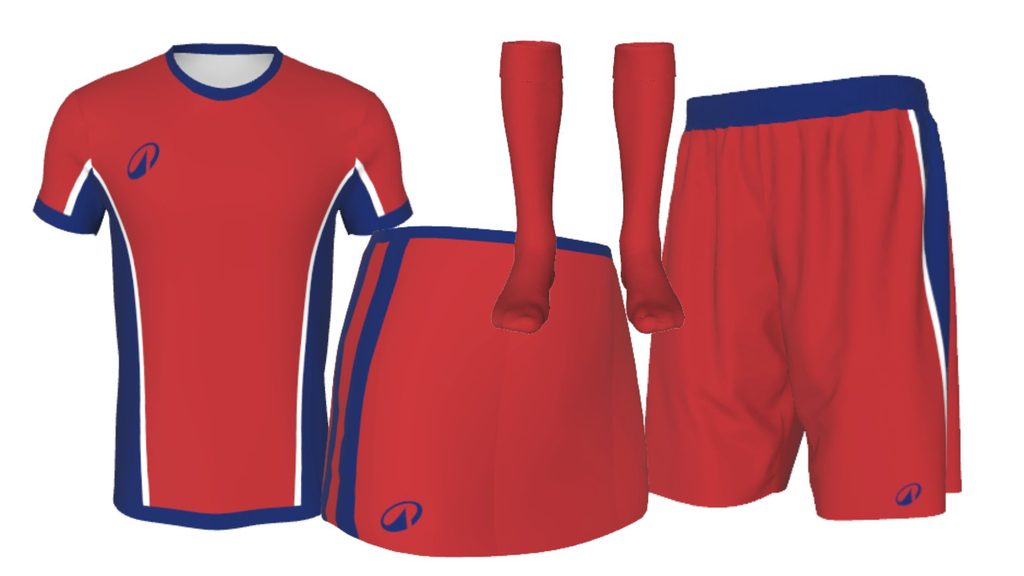
Red, white, and blue hockey kit combination with shirt, shorts, skort, and socks from Decathlon Club.

Shirts: fabric, fit, and performance

Hockey is repeated sprinting, low bending, and sharp rotation – the shirt has to work with the body.

  • Fabric: interlock or pindot polyester fabric for perfect sublimation printing, sweat wicking, and comfort.
  • Fit: athletic fit for performance squads, regular or relaxed for social teams and schools, women’s-specific cuts where appropriate. Youth shirts are cut looser to fit over protective equipment.
  • Sleeves: short sleeve as standard; long sleeve earns its keep from November onwards.

Shorts, skorts, and socks: where mismatched kit shows first

A squad in perfectly matched shirts and three different shades of navy shorts looks sloppy – and it’s always the lower half where colour-matching goes wrong when clubs buy from multiple suppliers. Ordering everything from one place is how you avoid it.

  • Shorts: lightweight, breathable, adjustable waistbands, lengths for different age groups. From £13.25 ex VAT.
  • Skorts: built-in shorts and stretch fabrics for women’s and girls’ teams, colour-matched to the main kit.
  • Socks: cushioned soles, arch support, and ankle protection, colour-blocked to meet league regulations for home and away.

Shirts start from £19.50 ex VAT.

Goalkeepers and training kit: the two things clubs forget

Almost every last-minute kit panic we see involves one of two garments: the goalkeeper’s shirt or the winter training layer. Plan both alongside the playing kit, not after it.

Goalkeepers need an oversized numbered shirt in a distinct colour that still belongs to the club’s identity. Because GK kit is a one-off within the order, it’s the easiest line to overlook – and the hardest to rush later.

Training wear – training tops, base layers, showerproof jackets, track pants – doesn’t all need to be bespoke. Mixing sublimated match kit with stock-colour training garments is a smart way to hit budget and delivery targets while keeping the core look intact. Coaches and support staff can match too: padded jackets, gilets, and polos in club colours tie the whole matchday presentation together.

Ordering and sizing: how to get it right first time

  • Collect names, numbers, and sizes early – before the summer holidays scatter everyone. Use the online size guides and order physical size samples before committing a full squad.
  • Juniors grow. Allow room for one to two seasons; a shirt that fits perfectly in September is tight by Easter.
  • Order buffer stock. A couple of spare shirts in common adult sizes and extra junior sizes covers late sign-ups and mid-season replacements.
  • Approvals kill deadlines, not production. In our experience the biggest cause of missed September starts isn’t manufacturing time – it’s a design proof sitting in a committee inbox for three weeks. Get sign-off authority agreed before the proof arrives.
  • Payment flexibility: the club, school, or parents can pay directly through their client portal, so the volunteer kit secretary isn’t chasing forty bank transfers.

Built to last more than one season

Hockey kit takes sliding tackles, stick clashes, and relentless washing. What to look for: durable polyester knits, reinforced double or flat-lock seams at stress points, and sublimated printing rated for regular washes. Sublimated names, numbers, and sponsor logos are in the fibres, not on them, so they withstand shin-pad abrasion without peeling.

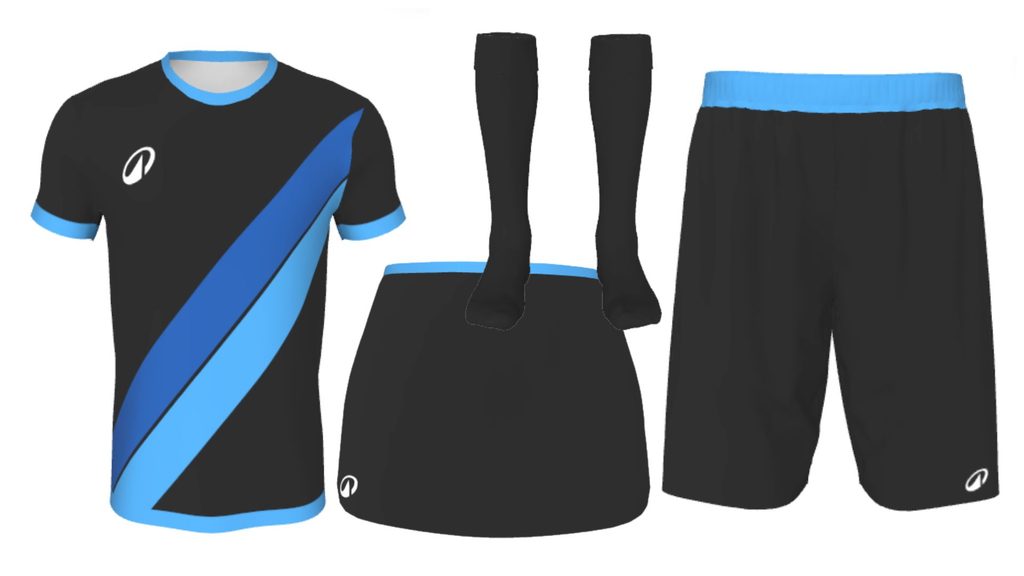
Sublimated black, sky and light blue hockey kit. Includes socks, shirt, shorts, and skort, from Decathlon Club.

From one kit to a club identity

A matchday kit is the start, not the finish. The clubs that get the most from custom teamwear build a joined-up range – match kit, training wear, leisurewear, and staff apparel in the same colours and fonts – and put it in a dedicated account via Decathlon Club’s client portal, where repeat orders can be completed seamlessly, without having to contact your account manager.

Two knock-on benefits coordinators underestimate:

  • Reorders stay consistent. The design team can produce brand guidelines – logo usage, text fonts, colour codes – and your design files and Pantone references stay on record, so next season’s new age-group team matches this season’s kit exactly.
  • Sponsors notice. A professionally consistent club is an easier sponsorship conversation.

The coordinator’s timeline

  • Late spring: finalise design ideas and get a quote.
  • June: confirm squad lists, gather sizes, get committee, bursar, or sponsor sign-off. Don’t wait for stragglers – that’s what buffer stock is for.
  • Before the school summer holidays: place the order. A July order lands comfortably before September fixtures; an August order is a gamble you don’t need to take.
  • All season: keep your final design files and Pantone references on record for top-ups and new teams.

The clubs that plan ahead play with confidence. Start in Decathlon Club’s Kit Designer, visit the custom hockey kit page, or talk to an account manager who’ll walk you through the whole process. Your team deserves to look and feel the part from day one.

Custom Rugby Training Kits: Pre-Season Checklist

It’s the first Tuesday of pre-season. Thirty-four players turn up, the contact tops from two seasons ago have split seams, half the minis are carrying size 5 balls they can’t pass, and the new signings are training in football shirts. Every kit secretary has lived some version of that evening – and every one of them will tell you the same thing: the clubs that look sharp in September sorted their custom rugby training kit in June.

This guide covers what every section of your club actually needs for pre-season – training tops, contact wear, layering, boots, and balls – and where we think your budget is best spent when it won’t stretch to everything. It’s written for the coaches and kit secretaries who have to make those calls.

Rugby players training under floodlights in custom decathlon training kit

The one deadline that matters: order by early June

Most adult sides begin training in early July; schools and universities kick off around late August, into September and October. Custom rugby training kit typically runs 4 to 6 weeks from artwork sign-off, and every supplier’s queue is longest in exactly the weeks you need them most. Work backwards and the conclusion is blunt: if your committee hasn’t signed off designs by early June, you’re gambling your September fixtures on someone else’s production schedule.

Our position: lock the order in before your AGM season distracts everyone. A club that orders in June trains as one squad from day one; a club that orders in August trains in mismatched cotton until October.

Planning by squad: who needs what

Start by mapping your sections. Needs differ more by age group than committees expect – minis don’t need heavy contact wear, and seniors will destroy anything that isn’t built for rucking.

SquadKey kit itemsNotes
Senior men / women2–3 training tees, 1 contact top, 2 shorts, 1 jacketSponsor logos, club colours, correct fit for men / women
Academy / U16–U182 training tees, 1 contact top, 1–2 shortsUnisex or women’s-specific sizing where needed
Minis / juniors2 training tees, 1-2 shorts, baselayersLighter clothing, fewer heavy contact items
Coaches / staffPolo, jacket, training topTouchline-ready, club-branded

Align colours and designs across every section so the under-7s and the first XV are visibly the same club. A tiered custom rugby training and match-day kit bundle keeps sponsor visibility and branding consistent from top to bottom – and it’s the format most sponsors ask about first.

Training tops: the workhorses

Training tops or shirts take more punishment than custom match shirts: wrestling drills, weekly wash cycles, and whatever a muddy Tuesday throws at them. They differ from match-day shirts in cut (looser, built for gym and conditioning work), fabric weight, and numbering. What actually matters when you’re comparing options:

  • Moisture-wicking polyester blends with enough stretch for contact prep and rapid drying between sessions
  • Mesh panels under the arms and across the back for July and August evenings
  • Reinforced seams at shoulders and neck – the first failure point when tops get grabbed
  • Sublimated crests and logos, built into the fabric rather than stuck on, so they don’t peel or crack in the wash

For pre-season we recommend a core range of short-sleeve tees for warm evenings and long-sleeve options for when September bites. Build them in your colours with our free online kit designer – sponsor blocks, position groups, and all.

Shorts, baselayers and layering for UK weather

UK pre-season weather is unpredictable; 28°C drills one week, sideways rain at a Friday friendly the next. Layering your custom rugby training kit is how you manage it.

  • Shorts: lightweight shorts for running sessions, durable rugby-specific shorts for contact blocks, stretch gym shorts for S&C. Check the size range runs from youth to adult XXL with women’s-specific fits – narrow cuts restrict movement, and juniors feel it most.
  • Baselayers: compression tops under the outer layer for warmth and muscle support; thermal versions become essential as autumn arrives.
  • Mid-layers: hoodies, quarter-zips or fleece for warm-ups and cool-downs – players want something they can pull on quickly between training blocks.
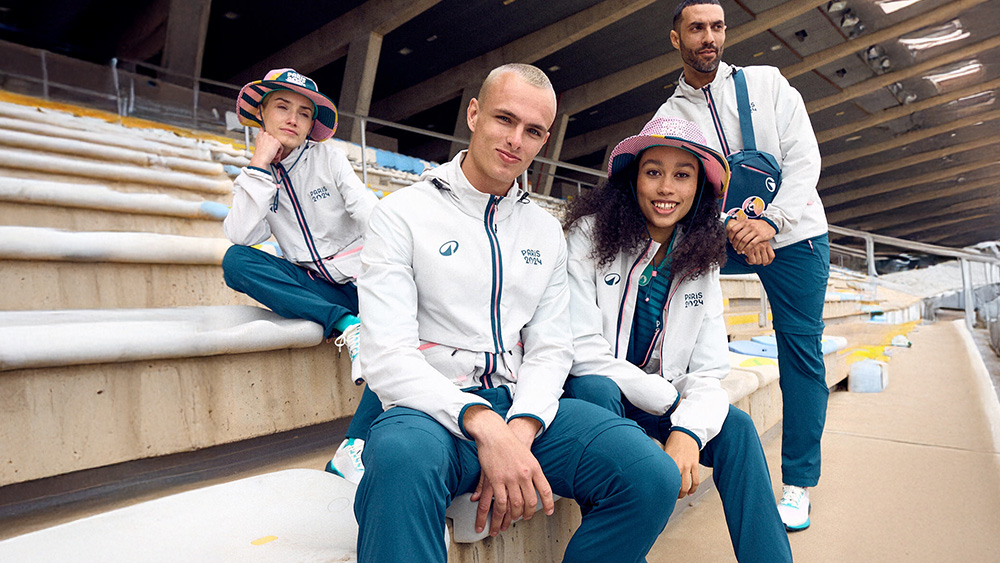
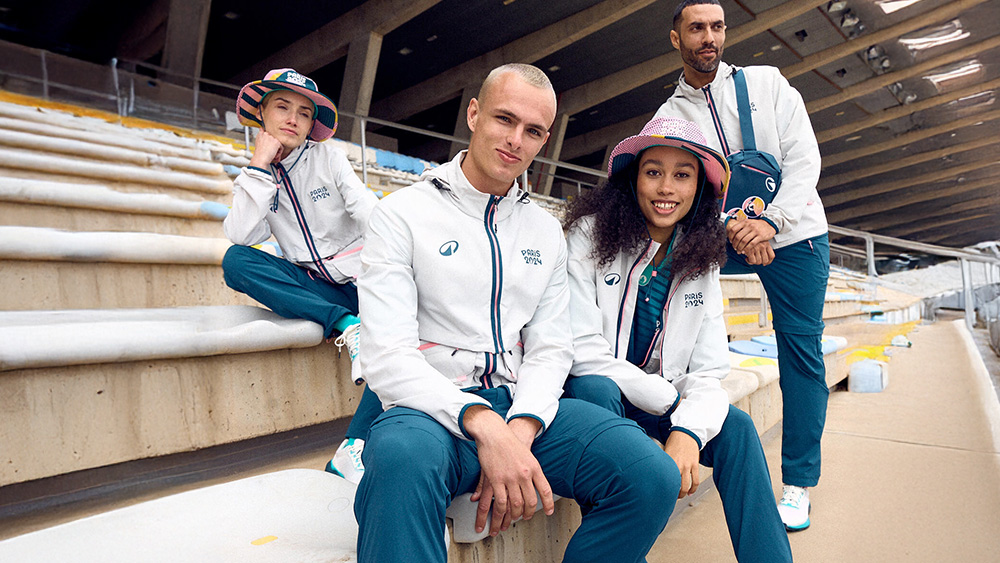
Athletes wearing custom Decathlon training wear for Paris 2024 Olympics.

Contact tops and outerwear: where we’d spend first

Once contact sessions ramp up, a standard training tee won’t cut it. Contact tops – sometimes called drill tops – are built for scrummaging, ruck work, tackle technique and live set-piece: rip-stop fabrics that resist tearing, elasticated cuffs that keep sleeves down through contact, reinforced shoulder and chest panels, and water-resistant coatings for wet nights.

If budget forces a choice, buy contact tops before mid-layers. Players can bring their own hoodie; they can’t bring their own rip-stop drill top – and a torn training tee in week two costs you a replacement anyway. With contact loads now formally managed even at elite level (the Premiership bans full contact until week four of pre-season from 2026/27), grassroots clubs are getting more structured about when contact kit comes out, which makes owning the right gear matter more, not less.

For outerwear: fully waterproof jackets for heavy rain, showerproof smocks for lighter conditions, and longer-cut touchline jackets for coaches. Custom contact tops and jackets carry your badge and sponsors so the whole operation, front row to coaching staff, stands together on the touchline.

Boots: match the stud to the surface, and check the regs

The right boots reduce injury risk and keep traction as surfaces change – and pre-season sees everything from rock-hard August pitches to sodden September mud.

  • Soft-ground (SG): screw-in metal studs for wet natural grass
  • Firm-ground (FG): moulded studs for the dry, hard surfaces of late summer
  • Artificial (3G/4G): rubber moulded studs or turf trainers

Forwards benefit from stability, stronger uppers and higher ankle support for scrummaging; backs generally prefer lighter, lower-cut boots for speed and kicking. On regulations: under World Rugby Regulation 12, studs must be 21mm or shorter with no sharp edges – and many youth sections go further, banning blades outright and requiring kite-marked aluminium screw-ins. Our advice is unambiguous: for juniors, skip blades entirely. Whatever marginal grip they offer isn’t worth the referee’s inspection or the risk profile. Coaches should check boots before every session, not just the first one.

Balls and core training equipment

Handling drills only work with the right ball in the right hands. The sizing is simple and worth pinning to the clubhouse noticeboard:

Age groupBall size
Minis (U6–U9)Size 3
Juniors (U10–U14)Size 4
U15+ and seniorsSize 5

Training balls should be durable synthetics with textured grip, balanced weight for kicking, and bright colours that show under floodlights. And don’t forget the unglamorous kit that actually shapes sessions: kicking tees, ball bags, pumps with pressure gauges, cones, contact shields and tackle bags.

Protection and player welfare

Pre-season is when contact loads build, and the welfare direction of travel across the game is clear. Your kit conversation should include protection from day one: mouthguards (mandatory for most contact sessions), headguards for players who want them, and padded undergarments compliant with World Rugby regulations. Round out the kit bag with tape, grip spray, water bottles, and foam rollers for recovery.

Club-branded accessories – socks, beanies, caps, kit bags – do more identity work than their price suggests. Put a simple pre-season kit checklist in front of every player at induction night, via club email or your club app.

Ordering with Decathlon Club: how it works

Decathlon Club builds custom rugby kit for grassroots clubs, schools, universities and corporate teams across the UK, from village sides to academy programmes, with a dedicated account manager on every order. The process:

  • Pick a template from the training tops, shorts and contact wear range
  • Choose your colours and upload your crest
  • Add sponsor logos and personalisation – initials, squad numbers, coach labels
  • Preview designs in real time, then request a formal squad quote

Sublimated printing means designs are part of the fabric, not printed on top, so they last the life of the garment. A few things committees that get it right first time tend to do: gather sizes and age groups early; agree colourways and sponsor requirements before the quote, not after; build in spare stock for mid-season signings; structure starter packs for new players and core packs for returning ones; and put sponsor contributions on training wear as well as match shirts – it’s the kit sponsors’ logos are actually seen in most weeks of the year. If sustainability matters to your committee, ask about our eco range.

Get your squad sorted

Pre-season waits for nobody, and the June ordering window is shorter than it feels. Start your design in the free kit designer today – it takes ten minutes to see your club’s colours on a full training range, and a formal quote is one click from there. Prefer to talk it through? Your dedicated account manager will handle sizing, proofs and delivery dates for you.

How to Order Custom Sports Kit

A step-by-step walkthrough for club secretaries and team managers ordering custom kit for the first time – with real timelines, so you can work backwards from your season start.


Every August, we take calls from clubs who ordered kit six weeks too late – and now face starting the season in last year’s outdated shirts, or with three new signings wearing plain training tops. It’s almost never because the supplier was slow. It’s because nobody told the volunteer ordering the kit how the process actually works, or how long each stage really takes.


So here’s the whole thing, stage by stage – exactly what happens when you order with Decathlon Club, how long each step takes, and where first-time orders most often go wrong. By the end you’ll be able to put a date in the diary for when your order needs to go in.

The timeline at a glance

Here’s the full journey, working forwards. If your season starts in early September, count backwards: your enquiry should land with us by early July at the latest.

StageTypical durationWhat you’re doing
1. Enquiry & quote1-2 working daysSending your brief, receiving pricing
2. Design & proofing1–2 weeksReviewing proofs, confirming colours & sponsors
3. Sizing & player orders1–2 weeksCollecting sizes, running a sizing check
4. Production3–4 weeksSublimation printing & garment assembly
5. QC & delivery1 weekQuality check, dispatch, distribution

1. The initial enquiry and quote

Most orders start with a quick brief: your sport, rough player numbers, and any design ideas or existing colours you want to keep. That’s genuinely all we need – you don’t need artwork, final numbers, or a committee decision to get a price.

From that brief, we’ll turn around a ballpark quote within 1-2 working days. Nothing is locked in at this stage – it’s simply enough for you to take a realistic price and timeline back to your committee.

2. Design and proofing

At this stage, we lock in your kit design, including your badge, sponsor logos, colours, and any names, numbers, and initials. Before anything goes near production, you’ll receive a digital proof – a mock-up of exactly how the kit will look. Proofs typically go through one or two rounds of revisions.

Three things to check on every proof before you sign off:

  • Colours against your club’s official Pantone references – screen colours lie, Pantone numbers don’t.
  • Sponsor logo placement and sizing – get written sign-off from the sponsor too, not just the committee.
  • Every personalisation detail: initials, squad numbers, captain’s armband, the lot.

“The mistake we see most often is a club approving a proof on a phone screen in a group chat. Take your time, look at it properly, and get two people to check it – a second pair of eyes on a proof costs nothing and saves receiving a misprinted kit.”

– Lucas, our Operations Manager

Football players in a match setting wearing blue and yellow Decathlon Club football kit.

3. Sizing and player order collection

Once the design is signed off, attention turns to sizing – and this is the stage to slow down on. Sizing errors are the one of the biggest sources of reorders and complaints, and almost all of them are avoidable at this stage.

For team orders there are two routes: a size-run chart the club manager fills in, or – increasingly the default – a Client Portal ordering system where each player logs in individually and selects their own size and personalisation. The Client Portal route removes the manager as a single point of failure… Nobody’s guessing whether your left-back is a Medium.

Whichever route you take, build in a proper sizing check before submitting final numbers – ideally with a sample size set at a training session. Our sizing guide covers how each garment fits.

4. Production

Our custom teamwear is produced using dye-sublimation printing, where the design is transferred into the fabric rather than on top of it. That means colours won’t crack, fade or peel with washing. There’s also no limit on how intricate the design can be – unlike screen printing, which is better suited to simple, low-colour-count jobs.

Production for a full custom order typically takes 3 to 4 weeks from final sign-off. This stage and the next one are processes you can’t compress – which is why everything before it matters.

5. Quality check and delivery

Before dispatch, every order goes through a quality check: stitching, sizing accuracy against the chart you submitted, and print quality. Delivery is to a single club address for the manager to distribute.

Youth football team in green and black modern sports kit posed for a team photo in front of a football goal.

6. Reorders and top-ups

Once your design and sizing are on file, reordering is quick. A shirt for a January signing or a replacement for a lost jersey doesn’t restart the whole process, because your design template and colour specification are already saved. A one-off replacement typically takes less time than a full production run, as all the artwork is ready to go.

Ask about reorders before you place your first order. It’s the question first-time secretaries never think to ask, and the one they most wish they had come February.

At Decathlon Club, every club can set up a Client Portal – meaning reorders are smooth sailing.

Our honest advice: the clubs who get it right

Having run this process with 11,000+ clubs, we’ll be blunt: the smoothest orders are never the fastest ones. The clubs who have a great experience are the ones who treat proofing and sizing seriously instead of racing to order. A few extra days checking a proof or trying on a sample set saves weeks of frustration – and the cost of a re-run – later.

And if kit budget is the thing holding your order back, that’s solvable too: the Kit Funder platform matches clubs with local business sponsors, so the kit can be part-funded before you even place the order.

Ready to start?

If your season starts in September, the clock is already running. Request a quote with your sport, player numbers and colours – you’ll have a price within a couple of working days and a clear timeline to work back from.

Standard vs Elite Custom Football Kits – Which is Best for Your Club?

Choosing a custom football kit should be exciting, not confusing. Custom Elite football kit or Standard? This guide is here to help you decide. Whether you’re organising a grassroots Sunday league side, managing multiple junior teams, or preparing a university first XI for a new season, you want a kit that fits your players, your budget and your ambitions.

At Decathlon Club, every football kit is designed to help your team look and feel its best. Both our Standard and Elite ranges are fully sublimated, fully customisable and backed by transparent, all-inclusive pricing. The difference isn’t in the design possibilities, it’s in the fabric, fit and performance.

This guide explains exactly what separates the two ranges, who each is designed for, and how to choose the right option for your club.

Quick Answer: Standard vs Elite Custom Football Kits

If you’re short on time, here’s the headline.

Both Standard and Elite football kits include everything you need to create a professional look for your club. Every shirt, pair of shorts and socks is fully sublimated and personalised with your club crest, sponsor logos, player names, squad numbers and your chosen design. There are no artwork charges or hidden extras – what you see is what you pay.

The difference comes down to performance.

Choose Standard if you want:

  • Outstanding value for grassroots clubs and schools
  • Comfortable, durable kit for weekly training and matchdays
  • A relaxed fit that suits players of all ages and body types
  • Professional customisation without stretching your budget

Choose Elite if you want:

  • Premium technical fabrics for higher-intensity football
  • A more tailored, competition-ready fit
  • Enhanced moisture management for demanding fixtures
  • A sharper look for first teams, academies and performance squads

At a Glance

FeatureStandardElite
FabricLightweight, breathable polyesterPremium moisture-wicking performance fabric
FitRelaxed and comfortableMore tailored and athletic
Design OptionsFully customFully custom
Club Crest & SponsorsIncludedIncluded
Player Names & NumbersIncludedIncluded
Best ForGrassroots clubs, schools, junior teamsAdult first teams, university squads, academies

Pricing is equally straightforward. Standard short-sleeve shirts start from £19.50 ex. VAT, while Elite shirts start from £25.50 ex. VAT. Both ranges include full design support, personalisation and transparent pricing from the outset.

If your priority is getting great-looking kit for multiple teams while keeping costs under control, Standard is an excellent choice. If your players are looking for a more technical fabric and a premium matchday feel, Elite is well worth the upgrade.

What Makes the Standard Range the Right Choice for So Many Clubs?

Great custom football kits shouldn’t come with a premium price tag. That’s why our Standard range has become the go-to choice for thousands of grassroots football clubs, schools and academies across the UK.

It delivers everything most teams need: durable fabrics, complete customisation and a professional finish that’s built to last throughout the season.

Comfortable Week After Week

From pre-season training through to the final whistle of your last league fixture, Standard kit is designed to keep players comfortable.

The lightweight polyester fabric is breathable and moisture-wicking, helping players stay cool during training sessions and competitive matches. It’s also built to withstand regular washing, so your colours stay vibrant and your kit keeps its shape throughout the season.

Whether you’re kitting out an Under-8s squad or a veterans’ team, Standard is made to perform every weekend.

A Fit That Works for Every Squad

No two squads are the same.

The Standard range offers a relaxed fit that gives players room to move without feeling restrictive. It’s a practical choice for clubs ordering across multiple age groups because it comfortably suits a wide range of body shapes and sizes.

For volunteer kit coordinators, that flexibility makes ordering simpler and helps reduce sizing concerns across the club.

Fully Custom, Without Hidden Costs

Every Standard custom football kit is completely bespoke.

Your players can wear:

  • Short or long-sleeve football shirts
  • Fully sublimated or cut-and-sew football shorts
  • Matching football socks
  • Personalised goalkeeper shirts

Every order includes:

  • Your club crest
  • Sponsor logos
  • League badges
  • Player names
  • Squad numbers
  • Professional design support

Everything is included within our transparent pricing. There are no additional artwork charges or surprise personalisation fees.

Built for Growing Clubs

Many clubs don’t just order one team – they’re managing several age groups, school teams or development squads.

That’s where Standard really comes into its own.

Once your design has been approved, we securely keep your artwork, colours and branding on file in your Client Portal. If a new player joins halfway through the season or someone needs a replacement shirt, reordering is straightforward and your club identity stays consistent.

For clubs planning ahead, that means less admin, faster repeat orders and a professional look across every team.

Is Standard Right for Your Club?

Standard is the ideal choice if you:

  • Run a grassroots football club.
  • Need to outfit multiple teams on one budget.
  • Want excellent quality without paying for features you don’t need.
  • Value straightforward ordering and transparent pricing.
  • Want every player to look part of the same club identity.

It’s proof that affordable doesn’t have to mean compromising on quality. With fully sublimated designs, all-inclusive pricing and professional support from start to finish, Standard gives clubs everything they need to step onto the pitch with confidence.

Women's football team in matching orange custom kits and a pink goalkeeper shirt getting ready in the changing room before a match

Inside the Elite Range: When Is It Worth Upgrading?

If your team plays at a higher level, competes in demanding fixtures or simply wants a more premium feel on matchday, the Elite range is designed with you in mind.

Elite combines the same unlimited design freedom as our Standard range with upgraded technical fabrics and a more athletic fit. The result is a kit that performs under pressure while giving your squad a sharper, competition-ready look.

Whether you’re preparing for a cup run, representing your university, or building an academy programme, Elite helps your team look as confident as they play.

Built for Performance

Every Elite shirt is made from premium moisture-wicking polyester that works hard throughout the game.

The lightweight fabric helps move moisture away from the body, keeping players cooler and more comfortable during high-intensity matches and warm-weather tournaments. Improved breathability also helps reduce distractions, so your players can focus on the football rather than their kit.

Just as importantly, Elite is built to last. The technical fabric stands up to regular washing while maintaining its shape, colour and performance throughout the season.

A Sharper, More Athletic Fit

Elite is cut differently from our Standard range.

The fit is more tailored through the shoulders, chest and sleeves, creating a cleaner silhouette on the pitch and in team photos. It reduces excess material while still allowing players the freedom to move naturally throughout the game.

For many clubs, it’s the small details that create a professional appearance. Elite delivers that refined finish without sacrificing comfort.

Four Custom Elite Football Kit Styles to Suit Your Squad

Every club has its own identity, which is why the Elite custom football kits offers several shirt styles to match different preferences.

Triumph

A semi-fitted design featuring premium 3D jacquard fabric for a modern, professional finish. Ideal for clubs looking for a distinctive matchday appearance.

Victory

Designed with a lighter, looser fit and raglan sleeves that maximise freedom of movement. A great choice for players who prefer a little more room without losing the premium feel.

Champion

Our most technically advanced Elite shirt. Champion combines a semi-fitted cut with high-performance fabric for clubs that want the very best from their match kit.

Elite Goalkeeper

Available in both short and long sleeves, our goalkeeper shirts are fully sublimated and personalised to match the rest of your club’s identity.

Everything You Need Is Included

Choosing Elite doesn’t mean paying extra for personalisation.

As with every Decathlon Club football kit, your price includes:

  • Club crest
  • Sponsor logos
  • League badges
  • Player names
  • Squad numbers
  • Professional design support

Elite shirts start from £25.50 ex. VAT, with matching shorts £19.25 ex. VAT. Goalkeeper shirts are also available, with long-sleeve options starting from £27.50 ex. VAT.

You’ll know exactly what’s included before you order, with no hidden artwork fees or surprise print charges.

Who Is Elite Custom Football Kit Best For?

Elite is an excellent choice for clubs that want to make a statement on and off the pitch.

It’s particularly popular with:

  • University first teams
  • Adult Saturday league clubs
  • Women’s first teams
  • Academy and development squads
  • Teams competing in county cups and regional competitions

If performance, presentation and player confidence are high on your list, Elite offers an upgrade your squad will notice every time they pull on the shirt.

Female football player and team in yellow and blue custom Decathlon sport kit, playing a match.

Standard vs Elite: Which Custom Football Kit Is Right for Your Club?

Both ranges are designed to give your club complete creative freedom. The biggest differences come down to how the kit feels, performs and fits once your players step onto the pitch.

Here’s a closer look.

Fabric

Both Standard and Elite use durable, moisture-wicking polyester to help players stay comfortable throughout the game.

Standard offers reliable performance for weekly training sessions and grassroots fixtures, while Elite uses a higher-grade technical fabric that delivers greater breathability and comfort during more demanding matches.

If your club plays once a week, Standard is more than capable. If you’re training regularly and competing at a higher level, Elite provides that extra performance edge.

Fit

Standard has a relaxed cut that’s comfortable across a wide range of body shapes and age groups.

Elite offers a more tailored fit with a closer profile through the shoulders and torso, creating a sharper, competition-ready appearance.

Neither is better – they’re simply designed for different priorities.

Design Freedom

Whichever range you choose, your creativity isn’t limited.

Both Standard and Elite are fully sublimated, giving you complete freedom to create a kit that reflects your club’s identity. Whether you want classic stripes, bold hoops, subtle fades or a completely bespoke design, every detail is dyed directly into the fabric.

That means your colours stay vibrant season after season, without cracking, peeling or fading.

Performance

Every Decathlon Club football kit is built to perform.

Standard comfortably handles the demands of grassroots football, school sport and weekly league fixtures.

Elite is engineered for clubs playing more frequently or at a higher intensity, with technical fabrics that help players stay comfortable during longer, faster matches.

Sizing

Both ranges are available in junior and senior sizes, making it easy to create a consistent look across your whole club.

Some players prefer the relaxed feel of Standard, while others enjoy the closer fit of Elite. If you’re unsure, we’re always happy to help you choose the best option before you place your order.

Price

Standard offers exceptional value for clubs managing tight budgets, while Elite provides additional technical performance for a modest increase in price.

The difference is typically around £5 to £7 per shirt and approximately £6 per pair of shorts, making Elite an affordable upgrade for clubs that want a more premium matchday experience.

Can You Mix Both Ranges?

Absolutely.

Many clubs combine the two custom football kit ranges to get the best of both worlds.

A popular approach is to choose Standard for junior teams, training wear or development squads, while reserving Elite for the first team’s match kit. Because both ranges can be produced in the same colours and designs, your club maintains one consistent identity from the youngest age group right through to the senior squad.

It’s a flexible approach that helps clubs balance performance, presentation and budget without compromising their overall look.

Ready to Design Your New Custom Football Kit?

Use our free online Kit Designer to design and order your own custom football kit, whether that’s Standard or Elite.

The Commonwealth Games: Grassroots Clubs Inspiration

The Commonwealth Games bring together athletes from over 70 nations, but every elite performance traces back to a local club, a volunteer coach, and a community programme. This article explores the history of the Games, how grassroots sport feeds the talent pipeline, the vital role of volunteers, the inspiration effect on participation, and why quality custom kit helps clubs build lasting legacy.